 |
International |
|
Vietnam |
|
 You
may click the flag for further You
may click the flag for furtherinformation about Vietnam |
Welcome to Vietnam (Music score)
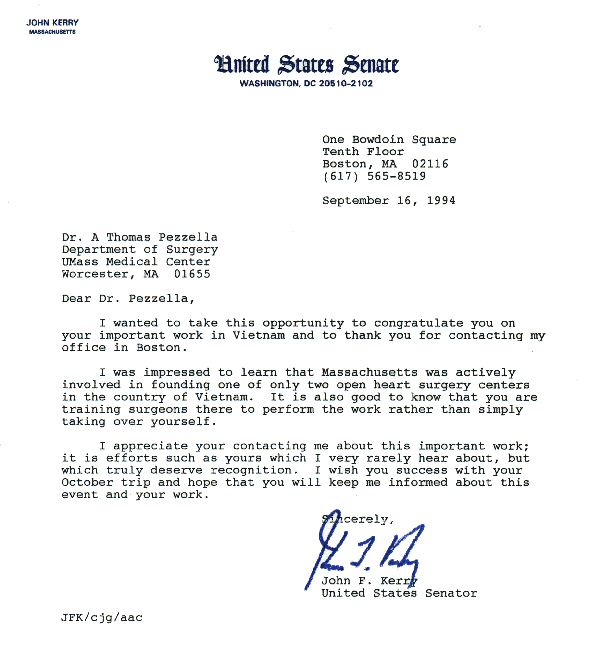
AT Pezzella On Location
- Vietnam
https://ctsnet.org/article/location-Vietnam
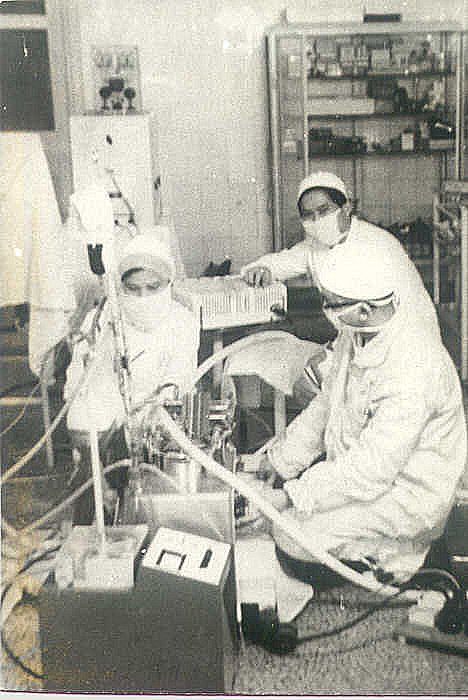
In early 1991 after returning to UMass Medical Center from
a tour of duty at Walter Reed Army Medical Center, following Desert Storm, Dr.
A. Thomas Pezzella was contacted by Judith Ladinsky, Professor of Epidemiology
at the University of Wisconsin in Madison, Wisconsin. She is the Chairman of the
U.S. Committee for Scientific Cooperation with Vietnam. In her trip to Vietnam
she was approached by Ton That Bach, M.D., a cardiothoracic surgeon at Viet Duc
Hospital in Hanoi, Vietnam. This is the center for all surgical operations done
in Hanoi. He approached her about the possibility of making contact with an
American cardiothoracic surgeon who might be interested in going to Vietnam to
get involved with helping them restore their cardiac surgery program.
 Later
in 1991, Dr. Ladinsky contacted him again at the University of Massachusetts
Medical Center asking if he would have interest in helping them. He agreed to do
so. In September of 1991 he traveled to Hanoi, Vietnam and made contact with the
cardiothoracic surgical team at Viet Duc Hospital. The Chief of Cardiothoracic
Surgery at Viet Duc Hospital was Dang Hanh De M.D. He was a 58-year-old
cardiothoracic surgeon trained in Czechoslovakia in 1968. During the visit, the
level of cardiac surgery at that hospital was assessed. Needless to say the
equipment and supplies were barely adequate. They had not done open-heart
surgery in several years. Based on the observations, both Dr. De and Dr.
Pezzella established a plan over the subsequent 3 years to re-establish open
heart surgery at Viet Duc Hospital. Essentially, an agreement was made to have
himself and his chief anesthesiologist come to the University of Massachusetts
Medical Center the following year for 2 months. Thereafter, a shipment of
supplies and equipment would be sent to help them upgrade their present
services. Following that open-heart surgery would be re-established, once they
felt comfortable to proceed. Following this, a return to Vietnam with a team to
work with their counterparts was planned to ensure that all the equipment was in
place and working accordingly.
Later
in 1991, Dr. Ladinsky contacted him again at the University of Massachusetts
Medical Center asking if he would have interest in helping them. He agreed to do
so. In September of 1991 he traveled to Hanoi, Vietnam and made contact with the
cardiothoracic surgical team at Viet Duc Hospital. The Chief of Cardiothoracic
Surgery at Viet Duc Hospital was Dang Hanh De M.D. He was a 58-year-old
cardiothoracic surgeon trained in Czechoslovakia in 1968. During the visit, the
level of cardiac surgery at that hospital was assessed. Needless to say the
equipment and supplies were barely adequate. They had not done open-heart
surgery in several years. Based on the observations, both Dr. De and Dr.
Pezzella established a plan over the subsequent 3 years to re-establish open
heart surgery at Viet Duc Hospital. Essentially, an agreement was made to have
himself and his chief anesthesiologist come to the University of Massachusetts
Medical Center the following year for 2 months. Thereafter, a shipment of
supplies and equipment would be sent to help them upgrade their present
services. Following that open-heart surgery would be re-established, once they
felt comfortable to proceed. Following this, a return to Vietnam with a team to
work with their counterparts was planned to ensure that all the equipment was in
place and working accordingly.
Dr. De and his anesthesiology associate came to the University of Massachusetts in September of 1992 where they spent two months. In February of 1994, a container was shipped to Vietnam containing two open heart surgical pump machines along with numerous other supplies and heart valves.
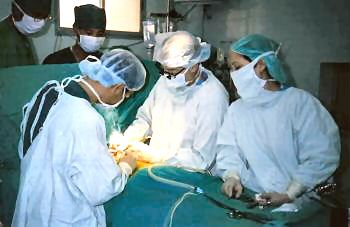
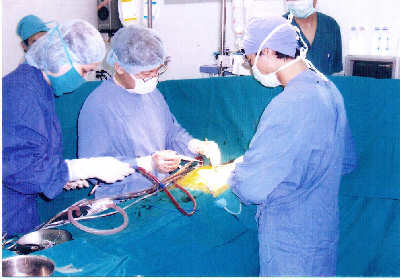
In November of 1994, a team of 4 personnel from the University of Massachusetts including Dr. Pezzella, Kevin Cotter, a perfusionist, Dr. Bob Giasi, an anesthesiologist, and Mike Boll, a biomedical engineer spent two weeks at Viet Duc Hospital. During that time, open-heart surgery was started again. A successful mitral valve replacement was performed during that visit.
Dr De with patient two weeks post successful operation.
The remainder of the visit revolved around establishing a future course of action for the Viet Duc Hospital. It was their recommendation that a facility should be built or expanded upon to bring state-of-the-art technology to Vietnam to better serve the people in giving quality open- heart surgery. At that point, Dr. De made contact with his counterparts to pursue this idea. A commitment was made by the city of Hanoi, the Ministry of Health, and the directors of the major hospitals in Hanoi that an open-heart program was needed and was viable and would be supported.
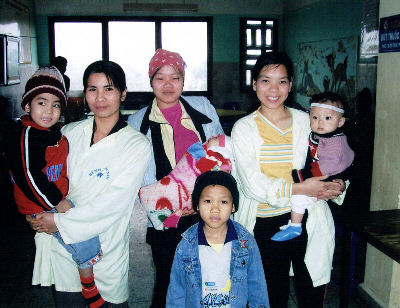
In summary, the 3-year project was both rewarding and gratifying. Although frustrating at times, it was encouraging to see open heart surgery once again being performed in Hanoi, Vietnam. Since that time several clinical papers have been published. At present a new OR facility at Viet Duc has been built with help from the German government and 8-10 open-heart operations are performed weekly.
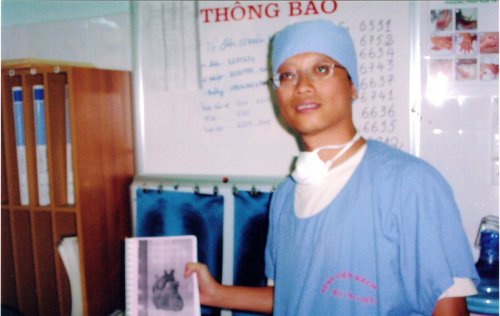
In October 2003 a visit was made to Vietnam. In Ho Chi Minh City, the Carpentier Institute is now performing 15-20 open-heart operations weekly. Started by Professor Alain Carpentier in Paris, France, the Vietnam Heart Institute (this site in French) is a successful model of cooperation between humanitarian groups and local government. In Hanoi, continued progress is being made. Two additional open-heart centers are up and running at this time.
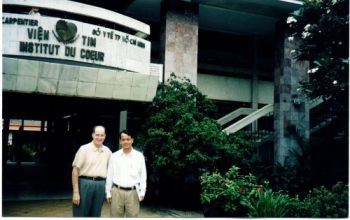
Dr Tom Pezzella with Dr Phan, Senior Cardiac Surgeon at Carpentier Institute
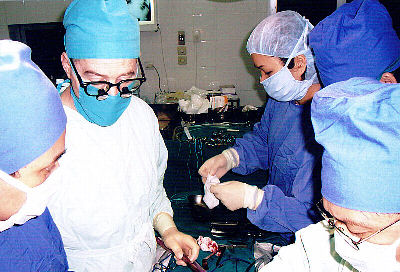
In February, 2006 A two week trip to Viet Duc Hospital was made. A series of operations were performed . Plans for equipping a third operating room were made. A 20 foot containers with equipment and supplies was sent by International Aid, and sponsored by the SOARE Foundation and arrived in Hanoi, November, 2006. The new operating room will be dedicated February, 2007. Hopefully, this will increase their cardiac surgery capability from 500 to 1000 patients over the next three years.
 |
|
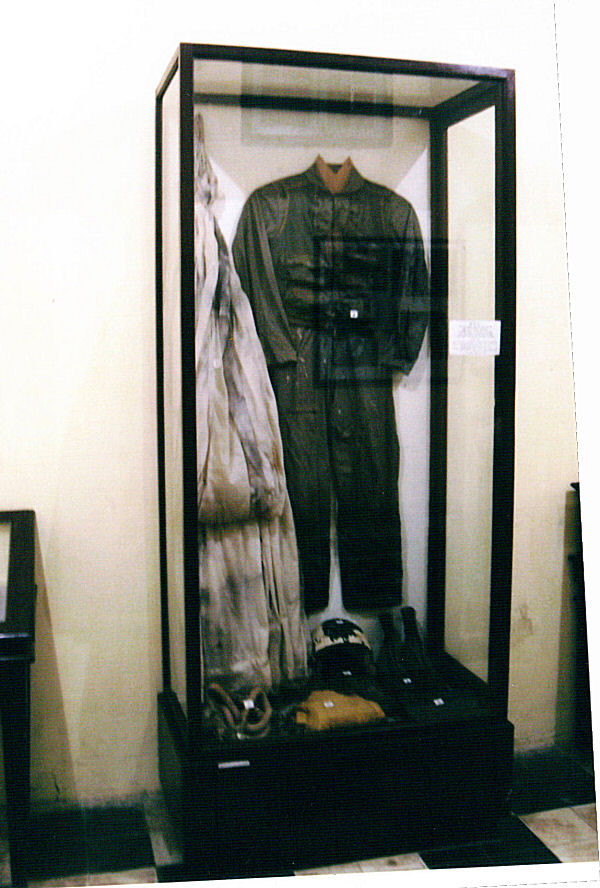
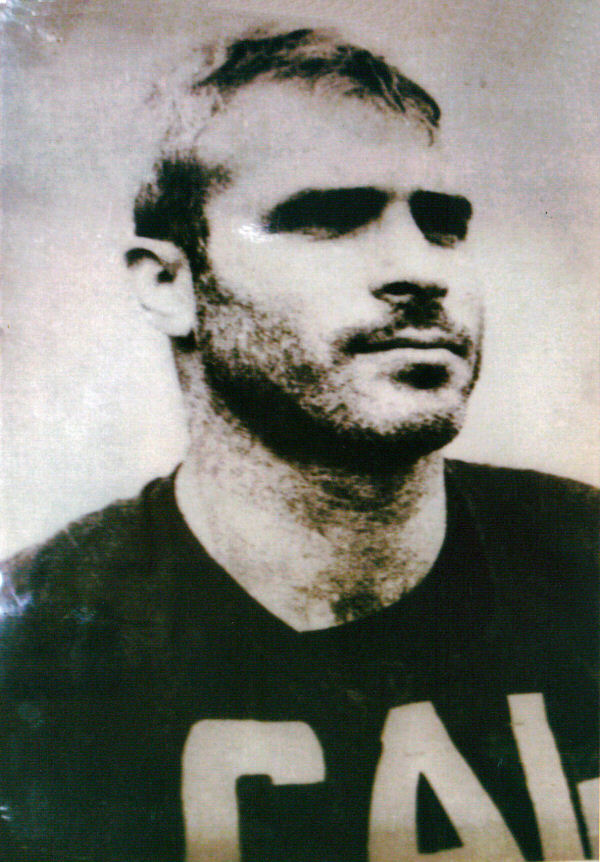
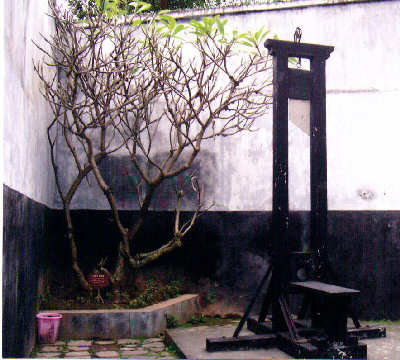
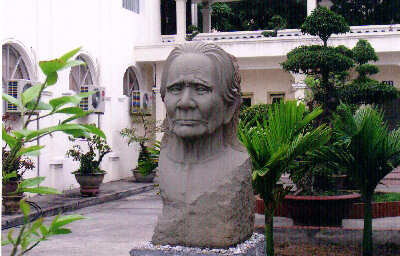
Vietnam's Tribute to the Flier John McCain |
 |
 |
 |
 |
On Location - Vietnam, 2006
Vietnam, a vibrant country of 82 million people in Southeast Asia, has made significant strides in the political and economic sectors since reunification under a socialistic government in 1975. Health care spending is less than five percent of GDP and remains socialized with small attempts to privatize. The development and growth of cardiac surgery has accelerated since 1992 with the opening of the Carpentier Heart institute in Ho Chi Min City (formerly Saigon). At present there are 10 centers performing cardiac surgery in Vietnam (6 in Hanoi; 2 in Ho Chi Min City; 1 in Haiphong; and another in Hue; 2 more centers in Ho Chi Min City and one in DaNang are scheduled to open soon). Over 30 cardiac surgeons perform over 2,500 procedures annually in Vietnam. Eighty percent of the caseload is valve and congenital heart operations. Coronary artery disease, which is increasing dramatically, is treated primarily with angioplasty/stenting. Interestingly, each stent costs around $1,000 US. There is a basic 3 year cardiac surgery training program in Hanoi and Ho Chi Min City, but the majority of surgeons have received formal and additional training in France, Australia, and Korea. English and French are widely spoken. The average “out of pocket” cost for heart surgery in Hanoi is $1,500-2,000 for congenital heart disease and $2,000-4,000 for valve surgery (average prosthetic mechanical valve costs under $1,000). A short term government program has allowed free open heart surgery for children less than 6 years of age with congenital heart disease. In Hanoi, cardiac surgeons are employed by the central or local government with a monthly salary ranging from $200 to $400.
 A number of individual surgeons and teams have been engaged with projects in
Vietnam over the past 14 years. Alain Carpentier made the greatest impact on
cardiac surgery with the Cardiac Institute in Ho Chi Min City. Presently over
1,200 cases are performed there annually, with Dr. Nguyen Van Phan developing an
international reputation with his aggressive approach and gratifying results
with complex rheumatic valve repair. Viet Duc hospital in Hanoi, the major
surgical training program in north Vietnam, performs over 800 open-heart
operations annually. Dr. Dang Han De, the recently retired chief of cardiac
surgery at Viet Duc Hospital, has done a monumental job in keeping cardiac
surgery alive during the “lean years” from 1968 to 1994. Dr. Le Ngoc Thanh (left
and above ), his
successor, continues this work, implementing, in a practical and phased way,
difficult operations for congenital heart disease, both in terms of decreasing
weight limits and complexity.
A number of individual surgeons and teams have been engaged with projects in
Vietnam over the past 14 years. Alain Carpentier made the greatest impact on
cardiac surgery with the Cardiac Institute in Ho Chi Min City. Presently over
1,200 cases are performed there annually, with Dr. Nguyen Van Phan developing an
international reputation with his aggressive approach and gratifying results
with complex rheumatic valve repair. Viet Duc hospital in Hanoi, the major
surgical training program in north Vietnam, performs over 800 open-heart
operations annually. Dr. Dang Han De, the recently retired chief of cardiac
surgery at Viet Duc Hospital, has done a monumental job in keeping cardiac
surgery alive during the “lean years” from 1968 to 1994. Dr. Le Ngoc Thanh (left
and above ), his
successor, continues this work, implementing, in a practical and phased way,
difficult operations for congenital heart disease, both in terms of decreasing
weight limits and complexity.
 Rheumatic fever and rheumatic heart disease, though still prevalent, is
decreasing. Yet the incidence of congenital heart disease remains constant, and
coronary artery disease is increasing, as noted. The challenges facing cardiac
surgery in Vietnam include: increased governmental funding for cardiac services;
continued improvements in sophisticated or more advanced surgical techniques;
the establishment of both clinical and basic research/development initiatives
and the slow emergence of private practice initiatives. For information
regarding volunteer opportunities for solo or group efforts please contact Thomas
Pezzella MD (atpezzella@hotmail.com ). The Children's Hospital in Hanoi, as
well as Viet Duc hospital would welcome a sustained collaborative relationship
with a dedicated NGO or medical center cardiac surgery team, particularly in
pediatric cardiac surgery.
Rheumatic fever and rheumatic heart disease, though still prevalent, is
decreasing. Yet the incidence of congenital heart disease remains constant, and
coronary artery disease is increasing, as noted. The challenges facing cardiac
surgery in Vietnam include: increased governmental funding for cardiac services;
continued improvements in sophisticated or more advanced surgical techniques;
the establishment of both clinical and basic research/development initiatives
and the slow emergence of private practice initiatives. For information
regarding volunteer opportunities for solo or group efforts please contact Thomas
Pezzella MD (atpezzella@hotmail.com ). The Children's Hospital in Hanoi, as
well as Viet Duc hospital would welcome a sustained collaborative relationship
with a dedicated NGO or medical center cardiac surgery team, particularly in
pediatric cardiac surgery.
In July, 2010, a 1 month study, sponsored by the Vina Capital Foundation, was performed of all the open heart cardiac surgery centers in Vietnam. Please see the attached report.
 |
|
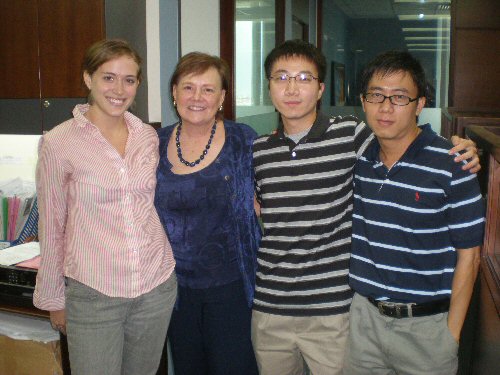
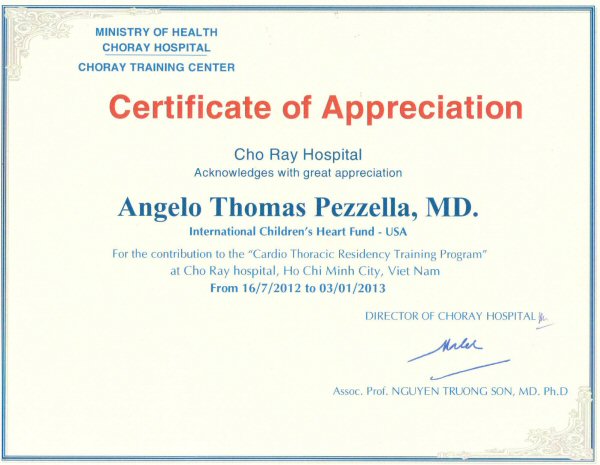
CT Surgery Residency Program Project 2013
A project to initiate a formal three year
cardiac surgery residency program
for Vietnam was accomplished during a six month program at Cho Ray Hospital in
HCM City, Vietnam from July 2012 to January 2013
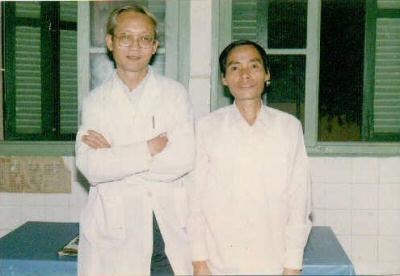
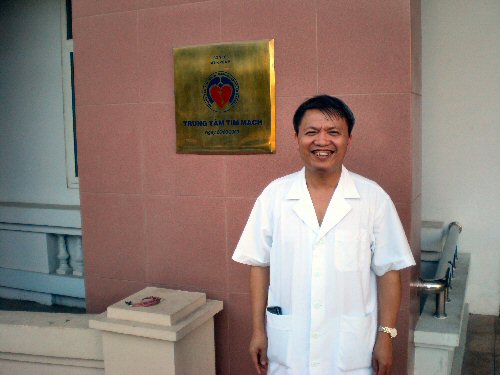
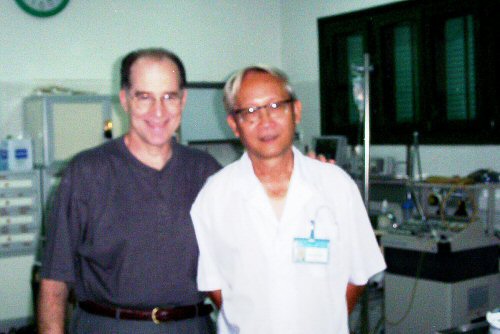 Dr De, 1991 |
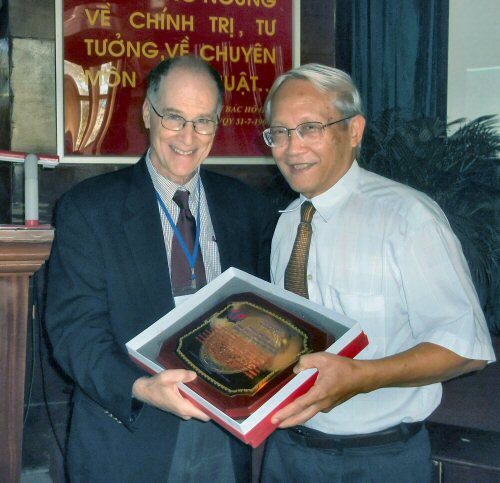 Dr De, 2012 |
| Dr Dang Hanh De was presented with
a plaque of appreciation by ICHF for his pioneering work in
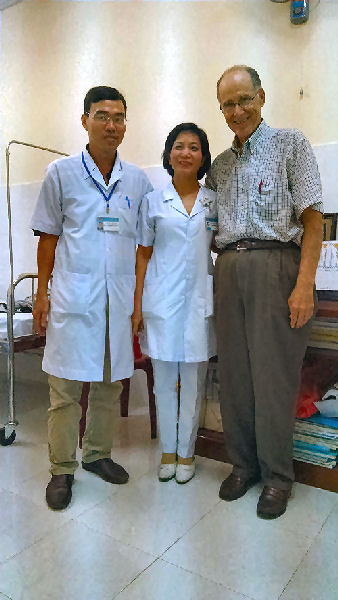
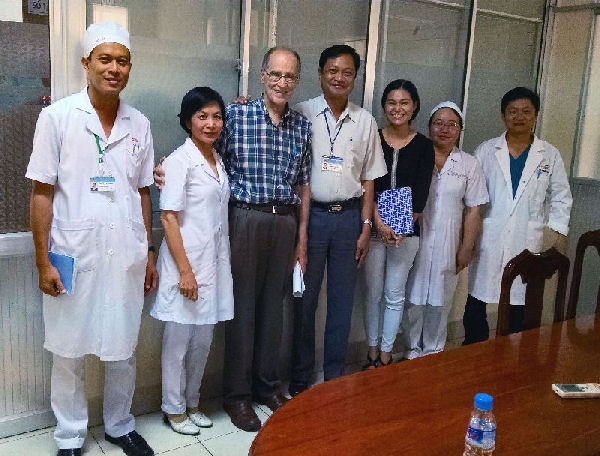
the development of CT Surgery at Viet Duc Hospital in Hanoi, Vietnam. He remains active, and a strong supporter of the continued efforts to revise the CT Surgery Residency programs in Vietnam. |
|
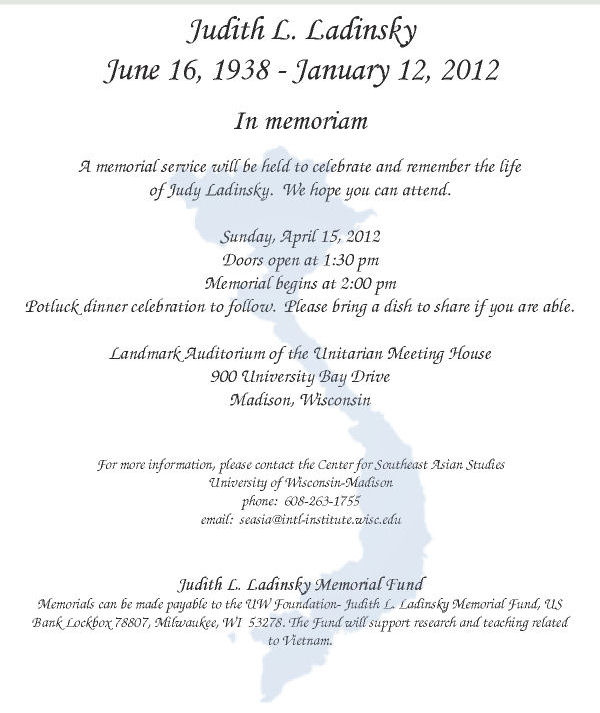
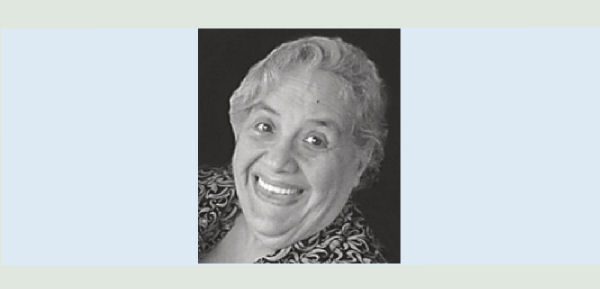 It is with a deep sense of humility and thanks that we acknowledge Judith's help and support these many years towards our efforts in Vietnam. She will be missed. |
 |
 |
 |
 |
 |
 |
 |
 |
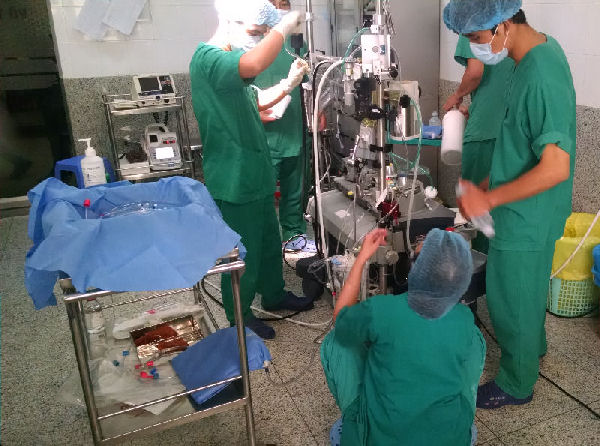
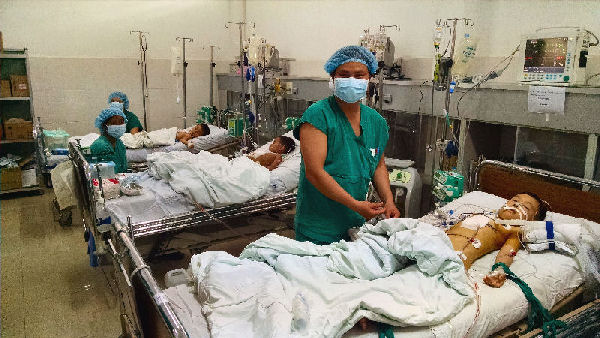
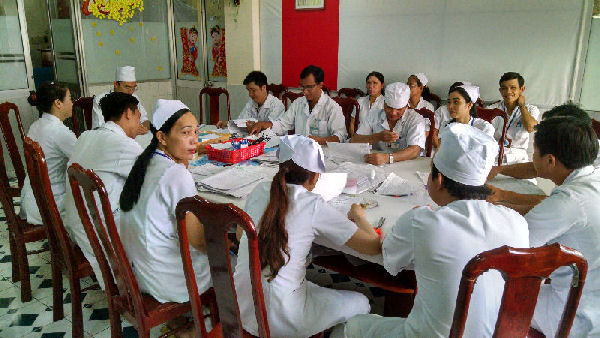
Pediatric Cardiac Surgery - 2016
At the invitation of
Childrens Heart Link in Minneapolis MN (
www.childrensheartlink.org ) a project was initiated and
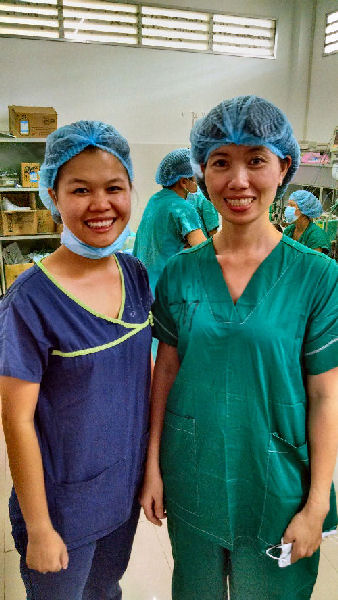
supported, from July 14- August 11, 2016 The trip was facilitated and coordinated by Adriana Dobrzycka Bechara, The International Program Manager at Childrens Heart Link, and Dr Huynh Hai Dang, the chief of CT Surgery at Kien Giang General Hospital. In addition, Dr Vu Minh Phuc, the head of the pediatric department and cardiovascular department at Children's Hospital #1 in Ho Chi Minh City. She should be congratulated for her assistance and dedication to the growth and development of pediatric cardiac surgery in Vietnam.
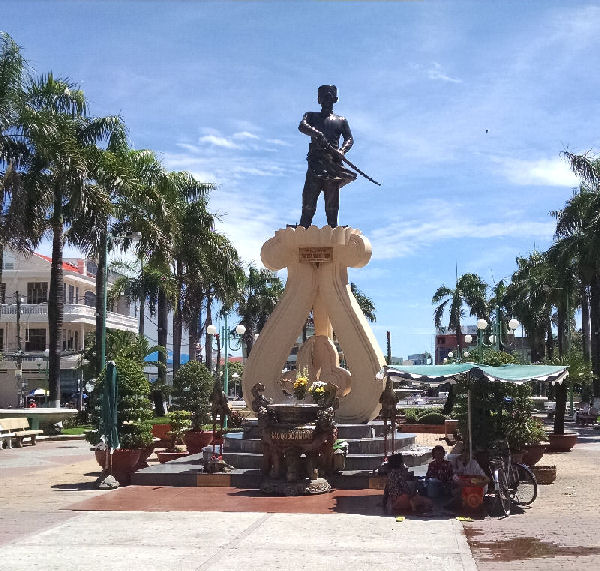
Kien Giang General Hospital Google Map for Hospital Vietnam-Background.pdf |